Monday, February 17, 2014

Work In Progress Critique # 1 Summary Statement


My theme is about showing the hidden beauty in science, and really exploring what beauty means to me.  Google defines beauty as “a combination of qualities, such as shape, color, or form, that pleases the aesthetic senses”.  I love this definition for its scientific phraseology, but it is missing one sense: feeling, or ambiance.  Beauty is subjective to the individual viewer and most anything can be made to look beautiful under the right circumstances. I see the beauty in the scientific process that is often overlooked by others.  The main focus of my work is to get viewers to understand this scientific splendor as I do.  
All of my photos are taken while I am in the process of doing actual lab work for my biology senior thesis.  I do not set up any of these scenes for the purpose of art, I merely document the natural beauty my work creates.  I do take advantage of different camera angles and lighting scenarios available in my lab to emphasize this beauty. I am not trying to glorify science or alternatively undermine its importance, but rather express how I view science as an artist: which is as a wonderfully complex process of ideas broken down into elegantly simple steps. 


Thursday, February 13, 2014

Reading Response # 3

          Sweet it is to scan...: Personal Photographs and Popular Photography discusses the role photography and the camera have played in capturing portraits since the invention of the photograph.  Since the middle of the 1800s, photography has changed from a time consuming pose for one image to the multitude of quick point and shoots we take today.  I think it important the distinction the book makes between portrait photography and other types of photography.  A portrait "portray[s] the individual...as they would wish to be seen and as they have chosen to show themselves to one another".  This is vastly different from other types of photography where the subject has no say in how they are shown.  Instead of a subject being hired by a photographer to portray a scene, portrait photography reverses this power dynamic and has the subject hire the photographer to portray THEM to their own liking.
           I can't help but think of all of the families that come take photo shoots on the Rollins campus.  There are constantly photo shoots of weddings, sweet-16's, and Christmas Cards going on around my school, and I find it ironic that the majority of the people who are posing for these photos have NO association with Rollins College whatsoever!  They know nothing about the space they are using other than that it is aesthetically pretty. This is where they want to be portrayed, and so this is where a paid photographer takes their picture. Does the fact that these people have posed in this foreign space alter the reality of their picture?  Ultimately, maybe not.  But what about the photoshop and editing tools, or the make up and matching outfits that families where to be photographed in?  This combined deception doesn't really give an outside viewer a realistic idea of those being photographed.  But this is the difference between documentary and portrait photography.  Is portrait photography any less valuable because it is portraying an ideal rather than a reality?

Feedly Post # 5

"Photography allows me to look at the little and unimportant objects around me and make them a part of my history just by giving them attention."

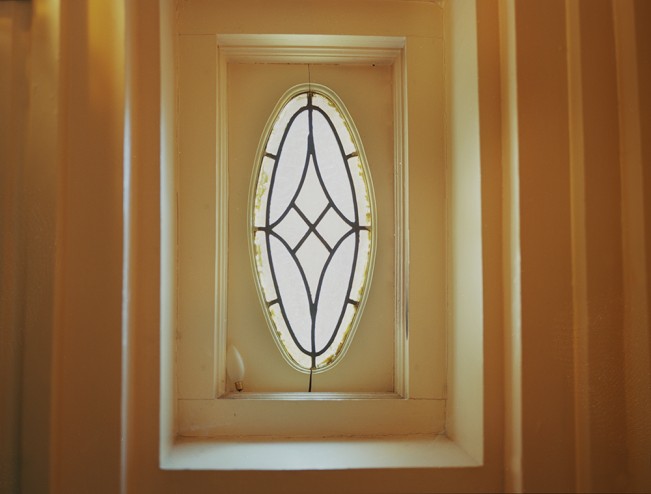
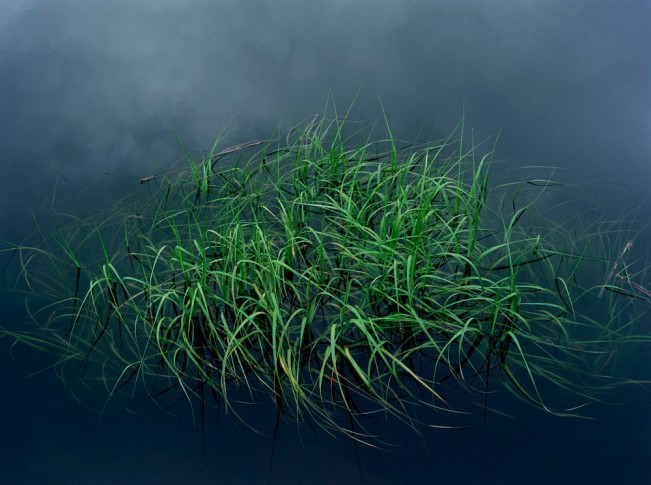
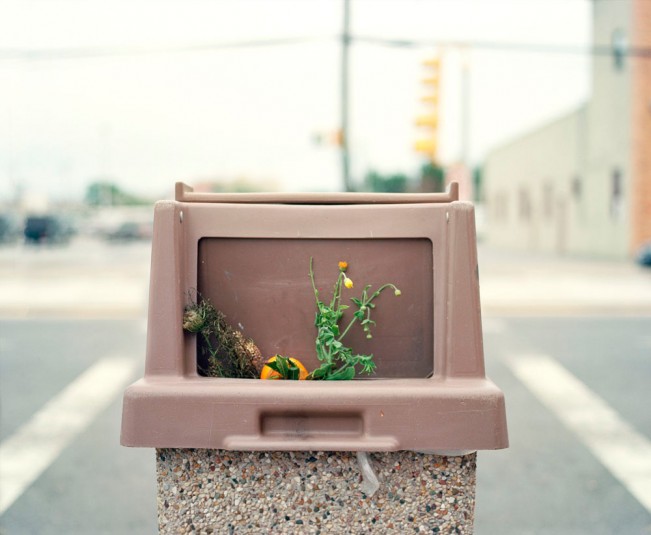
     I really like this quote from Dana Stirling's Cache Memory photographic series on Lenscratch.  Her artists statement says that her theme throughout her work is to capture the overlooked and fleeting nuances in the world.  By photographing these simple moments in time, she is preserving each scene for eternity while making herself a unique memory of that instant at the same time.  I enjoy many of the images she has chosen to photograph, which range from light coming in a window at just the right angle, to fog momentarily surrounding a tuft of grass, to an unfortunate bunch of wilted flowers that didn't quite make it all the way into the trash can.  Picture 002
Dana-Stirling-_-float
Dana-Stirling-_-bin


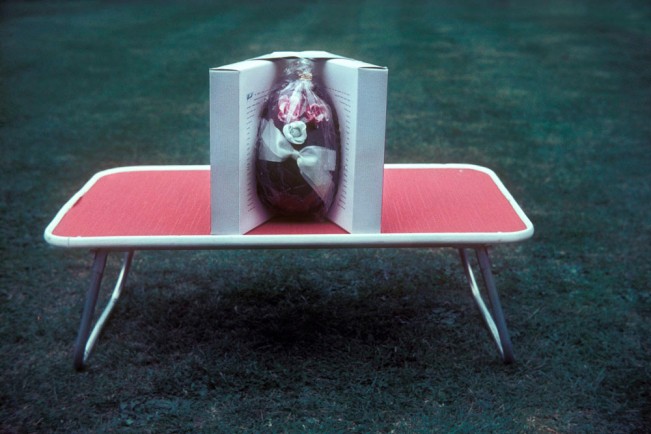
          However, other photographs in her series I felt were too posed and obviously constructed by the photographer to really stay true to her theme of capturing the little overlooked moments in life. Sure, she has done an excellent job of creating a certain mood or ambiance in each of her works, but to me the fact that I can tell that she did in fact create it detracts from the realness of the image.  I now feel like she is playing all of us. Are any of these moments real?  Did she construct all of them.  The few blatantly obviously posed photos detract from the allure of her other very strong and previously believable images.  

Dana-Stirling-_-present

Here is the url to her entire work as well as her artist statement.  
http://lenscratch.com/2014/02/dana-stirling-cache-memory/

Wednesday, February 12, 2014

Final Project, First Images


          The images below are from the first round of photographs I took in lab for my extended final project.  My theme is about showing the hidden beauty in science.  All of my photos are taken while I am in the process of doing actual lab work for my biology senior thesis.  I do not set up any of these scenes for the purpose of art, I merely document the natural beauty my work creates.  I do take advantage of different camera angles and lighting scenarios available in my lab to emphasize this beauty.  I would like to make it clear that I am not trying to glorify science or alternatively undermine its importance, but rather express how I view science as an artist.  I see the beauty that is often overlooked by others and that is the main focus of my work. 
            These five images are those that I am unsure whether or not to include in my final piece.  They give a good example of the variety of types of images I am seeking to include though, and I would love feedback on whether or not you think these images are strong or not and why.  While I am resisting the urge to define my end project too strictly, I am aiming to include some close ups of specific equipment as well as some wider shots of the lab in general.  Some may seem abstracted to all while others may only make sense to scientists who use the same equipment.  I am eager for feedback, so let me know what you think! 


Saturday, February 8, 2014

Feedly Post # 4


       I was initially drawn to Amanda Keller Konya's photographic series on Lenscratch called "Heist" because I recognized the mural on the front page.  The mural depicted is of a beautiful mural mosaic in downtown Los Angeles in California, which is where I grew up.  In real life, the mural has many bright colors, including some gold leaf, and I was surprised that this photographer chose to shoot this scene in black and white, which to me made what in reality is a beautiful, colorful memory of my childhood into a drab, splotchy picture of no great importance.  Upon further reading of Amanda Konya's work in this series, she actually printed her photos using a gelatin silver printing process.  This was meant to relate to the antiquated black and white cinema of the 1950s present during the start of Howard Ahmanson's commission to produce the 40 mural mosaics for the city of Los Angeles that are the stars of Konya's photographs.  Maybe it’s due to the digital reproduction on this blog, but I do not think these silver prints do justice to the actual mosaics in the slightest.  And maybe that was Konya's point.  The industrial revolution was going strong in West America during the 1950s and the companies that commissioned Ahmanson were often banks, insurance companies, home savings and loans buildings, or other private industries that centered on the public's financial state.  To me, these photographic reproductions represent the undertone of hard work, steal, and struggle needed to produce LA's successful business center so far removed from the rest of developed society back then.   Beneath the glittering facade of every mosaic is a harshly contrasting, splotchy picture.  Having grown up in frequent contact with these mosaics, I feel like part of my innocence has been squashed through this series.  Konya has revealed to me a side of Los Angeles I knew was there but never really felt the need to think about before.

       Below are some images of the murals I know personally as well as the link to Amanda Keller Konya's blog post.

http://lenscratch.com/2014/02/amanda-keller-konya-heist/


19KellerKonyaHeist01KellerKonyaHeist


06KellerKonyaHeist

http://lenscratch.com/2014/02/amanda-keller-konya-heist/

Reading Response # 2

       Surveyors and Surveyed: Photography Out and About by Derrick Price discusses the implications behind photography being labeled as documentary or photojournalism.  These truth-seeking photographers have the responsibility of providing unbiased story-telling images that preserve the complete authenticity of the scene.  It occurred to me while reading that this responsibility is utterly absurd and ultimately unattainable!  A picture is worth a thousand words, and I completely agree that photos can be very effective at providing an audience with the "feel" of a location and a specific emotion that photo evokes.  However, to say that the photographer must tell an un-biased story is even more ridiculous than asking a writer to do the same.  In both situations, the photographer or author must pick his/her subject matter as well as how best to interpret it.  A photographer must not only choose what to include in his camera's frame, but what angle to photograph it at, what time of day and light to photograph in, etc.  The exact same scene can look completely different and therefore evoke different moods based on the timing and lighting.  Similarly, a photo of a flower taken in the middle of a war zone is still just a photo of a flower if that is the only thing pictured in the camera's frame.  
       Photographers need to make decisions all the time in order to be successful in their documentary endeavors.  If photographers shot pictures at random in the hopes to objectively capture the full aura of an event their photos would be dismal at best and any attempt at conveying a message to the general public would be lost.  Instead of demanding that photographs are completely objective proof that can be used to authenticate anything, people should regard photos with the same reserve in which they read news paper articles.  Although the main purpose of "news" is to objectively educate the reader, there is always an undertone objective to the news station and therefore their news is slightly tainted with their bias.  Similarly, even independent photographers have their own artistic objectives.  
       So, if effective photography will always be a subjective field no matter how many rules and regulation are put on it, and if one can never trust a photograph to be void of any altercations or manipulations via photoshop-like applications, then should photography be used at all for documenting worldy events?  And if it proves untrustworthy of this use, then what are the implications of this for other fields in wich photography is depended upon, such as science or cultural anthropological and historical studies?  Are all photos meaningless or, if not, where is the line of reason within them? 

Wednesday, January 29, 2014

Feedly Blog Post #3


           Dawn made a post on Feedly the other day about Thomas Albdorf’s series titled Parts of the Whole.  It is very apropos for our discussion on Chapter 1 in Photography: A Critical Introduction.  Albdorf’s work consists of sculptures he makes for the sole purpose of photographing them.  The sculptures themselves are never displayed.  Albdorf’s objective in this is to explore the meaning of digital media and how an artwork and its interpretation is changed when put in a photographical format. 
            Albdorf struggles with “making the world visible” through his photographed sculptures of simple structures.  After our discussion about whether photography is in fact an art form, and under what pretenses if this is the case, Albdorf’s work really speaks to me…it says, “There is no answer!”  It says, “This is a hopeless dispute that will never be solved!”  The scantiness of his sculptures in their precarious positions seems as if he took the photograph just in time to preserve his work before it all came crashing down.  In a similar theoretical rhetoric, I feel all of photography is like this.  Although there is a permanence in the ease to which one can replicate a digital photograph, the very fact that it is digital makes it an impermanent, visual allusion.  No one can actually physically grasp what is in a photograph.  In one sense, I feel the world is under one big deception, and as soon as we realize it, the art of photography will come crashing down just like Albdorf’s sculptures. 
            Maybe that was all a little too deep and I am making too many assumptions from his work, but Albdorf’s images do make me feel anxious.  As shown by the cardboard boxes about to topple over and the white disc mysteriously standing upright on its own, I think that these sculptures were never actually there.  Nothing existed to photograph and instead these are all digitally created images completely removed from their original subject matter.  The length of the deception is unknown and that, to me, is what is most alarming about his work.   

Screen Shot 2014-01-20 at 22.29.51

Screen Shot 2014-01-20 at 22.29.27

Here is the website to Dawn's blog which includes the links to the original article as well as more pictures from Albdorf's collection.
http://rollinscollegephotovideo.blogspot.com/2014/01/darren-campion-on-thomas-albdorf.html