Wednesday, January 29, 2014

Feedly Blog Post #3


           Dawn made a post on Feedly the other day about Thomas Albdorf’s series titled Parts of the Whole.  It is very apropos for our discussion on Chapter 1 in Photography: A Critical Introduction.  Albdorf’s work consists of sculptures he makes for the sole purpose of photographing them.  The sculptures themselves are never displayed.  Albdorf’s objective in this is to explore the meaning of digital media and how an artwork and its interpretation is changed when put in a photographical format. 
            Albdorf struggles with “making the world visible” through his photographed sculptures of simple structures.  After our discussion about whether photography is in fact an art form, and under what pretenses if this is the case, Albdorf’s work really speaks to me…it says, “There is no answer!”  It says, “This is a hopeless dispute that will never be solved!”  The scantiness of his sculptures in their precarious positions seems as if he took the photograph just in time to preserve his work before it all came crashing down.  In a similar theoretical rhetoric, I feel all of photography is like this.  Although there is a permanence in the ease to which one can replicate a digital photograph, the very fact that it is digital makes it an impermanent, visual allusion.  No one can actually physically grasp what is in a photograph.  In one sense, I feel the world is under one big deception, and as soon as we realize it, the art of photography will come crashing down just like Albdorf’s sculptures. 
            Maybe that was all a little too deep and I am making too many assumptions from his work, but Albdorf’s images do make me feel anxious.  As shown by the cardboard boxes about to topple over and the white disc mysteriously standing upright on its own, I think that these sculptures were never actually there.  Nothing existed to photograph and instead these are all digitally created images completely removed from their original subject matter.  The length of the deception is unknown and that, to me, is what is most alarming about his work.   

Screen Shot 2014-01-20 at 22.29.51

Screen Shot 2014-01-20 at 22.29.27

Here is the website to Dawn's blog which includes the links to the original article as well as more pictures from Albdorf's collection.
http://rollinscollegephotovideo.blogspot.com/2014/01/darren-campion-on-thomas-albdorf.html


Sunday, January 26, 2014

Reading Response #1

           In chapter 1 of Photography: A Critical Introduction, Liz Wells discusses when photography was first invented and its controversial role as art, science, and technology.  As a science major and an art minor, I find this point of view intriguing.  The French journal La Lumiere discusses photography under the realms of science and art.  Writer Baudelaire was of the strong opinion that photography should be used solely to aid the sciences: to provide what the memory forgot.  From this standpoint, I find scientific illustration an interesting topic.  Initially made to assist scientists in their anatomical dissections or identifications of biological organisms, scientific illustrations have changed roles to become primarily a form of art.  It is not uncommon to find that anatomically correct fish or a scientifically labeled flower framed in someone's kitchen.
       As photography took over as the main form of image capturing for the sciences, scientific illustrations became obsolete in the scientific world but gained popularity in the art world.  Now a days photography is used frequently for both scientific and artistic purposes.  However, I can't help but wonder that as technology continues to advance and better imaging systems are found for scientific use, if photography's role will become solely artistic.  Much like the antique PCR machine that is now a statue in the Rollins admissions building, photography is guaranteed to eventually become an outdated form of scientific aide.  
       So, if art can be used for science, and outdated science can become art, then what implications does this have on photography?  Will high-resolution microscope photographs one day hang side by side the scientific illustrations of centuries ago?  If it is determined that photography will eventually become only a form of art, and not a scientific procedure, then what is stopping us from calling scientific procedure art right now?  

Wednesday, January 22, 2014

Feedly Post #2

     While pursuing my classmate's blogs, I was intrigued by Conor's idea of changing meaning to photographs based on the words associated with them.  In his first feedly blog post, Conor includes a picture of the George Washington Bridge taken by Blake Andrews from an old post card.  Like Conor, I too was attracted to this photograph enough to click on his blog and read about it.  I was interested that this supposed photograph looked more like a colored pencil drawing than a photograph...and maybe the original post card was in fact a drawing.  But the fact that Black Andrews is representing it as a photograph provides a whole new meaning and use to the image.  No longer is it a precious paper copy hard to duplicate and easy to ruin.  Now it is digitized.  Simply the lack of its previous rarity makes it less valuable to me.  If I were the maker of this post card, I might be angry with Mr. Andrews for taking the uniqueness away from my original and making it easily accessible to everyone.

     With this interpretation, the photograph now becomes a cheap fake rather than the familiar memory Conor associated it with.  And this in turn continues Connor's theory that photographs are instilled with the meaning that words give it.  There are so many different connections one can make to any photograph...so many stories waiting to be discovered through a single image.  The mysteries behind each photograph's potential based on viewers' own experiences and personalities is something I find truly fascinating.  So, like Conor, I am adding a few more words to the mix.  Now it’s your turn.  


Here is the link to Conor's Blog.
http://feedly.com/index.html#search%2FMeaning%20and%20Meaning%2Fuser%2F98ffe59b-c144-4967-b344-118e439e029f%2Fcategory%2Fglobal.all

Thursday, January 16, 2014

Artist Selections

Below is the list of artists I would enjoy researching in order of preference.

1) Zoe Leonard
2) James Casebere
3) Walead Beshty
4) Sharon Lockhart
5) Florian Maier-Aichen
6) Roe Ethridge
7) Wolfgang Tillmans
8) Taryn Simon
9) Candida Hofer
10) Robert Adams

Feedly Post # 1

     The photographic series by E.J. Camp entitled "Sea" is very appealing to me.  Being a marine biology major, I have a natural draw toward the ocean, and I think E. J. Camp captures both the chaos and the beauty there.  After reading her biography, I find it interesting that she was born near the sea in San Francisco, but was raised in the land locked state of Kentucky.  I can't help but wonder if her photographic work with the ocean is a way for her to explore the childhood she might have had if she had stayed in San Francisco.
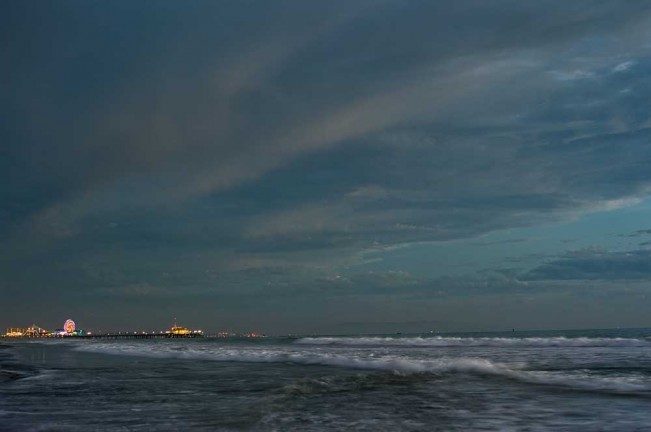
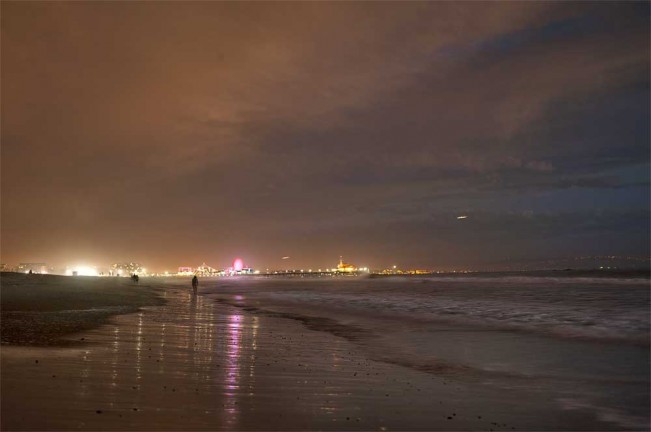
     Below are two photographs of hers that caught my attention.  They are of Coney Island in New York.  This subject matter is the icon of many children's dreams: an amusement park and the island of adventures in Pinocchio.  However, the way Camp has captured it makes Coney Island seem unattainable so far in the distance, and the clouds make the entire scene look ominous.  Going along with our Assignment 1 criteria, I am also drawn to the fact that these two photographs are of the exact same subject, but taken under different lighting.  Although I think both of them are still ominous, I do have a much different response to the soft deep blues of the first photo as opposed to the harsh bright lights of the second in which one could imagine an electricity fire erupting at any moment among the chaos of the park.  
Santa Monica Pier Night II by EJ Camp 2012Santa Monica Pier by EJ Camp 2012

Here is the url to the rest of her series on Lenscratch if you would like to take a look.

http://lenscratch.com/2014/01/e-j-camp-sea/


Chapter Selections

Below is the list of chapter from our textbook in order of interest to me.

Chapter 2: This chapter focuses on the documentary role of the camera in relation to traveling and photojournalism.  Since I will be backpacking through Europe this summer with the same camera I am using for this class, I am very interested in learning more about photography's role in journalism and what travel photographers look for when they are taking photos on the go.

Chapter 5: This chapter focuses on the every-day use of photography that has inundated our lives in the form of advertisement and commercialism.  Since I am hoping to get my MBA in marketing after graduating from Rollins, it would be very import for me to know the reasons and strategies behind marketing something through photography.

Chapter 3: This chapter focuses on the personal use of photography in today's popculture.  Everyday immediate communications have recently been entirely picture based with the invention of snap chat and the selfie.  Being on the cusp of this generation, I am guilty of a selfie or two and I also own and use snapchat.  However, I am still fascinated by the obsession of people just a few years younger than me with their phones, and the need to send rediculous pictures of themselves to everyone they know.